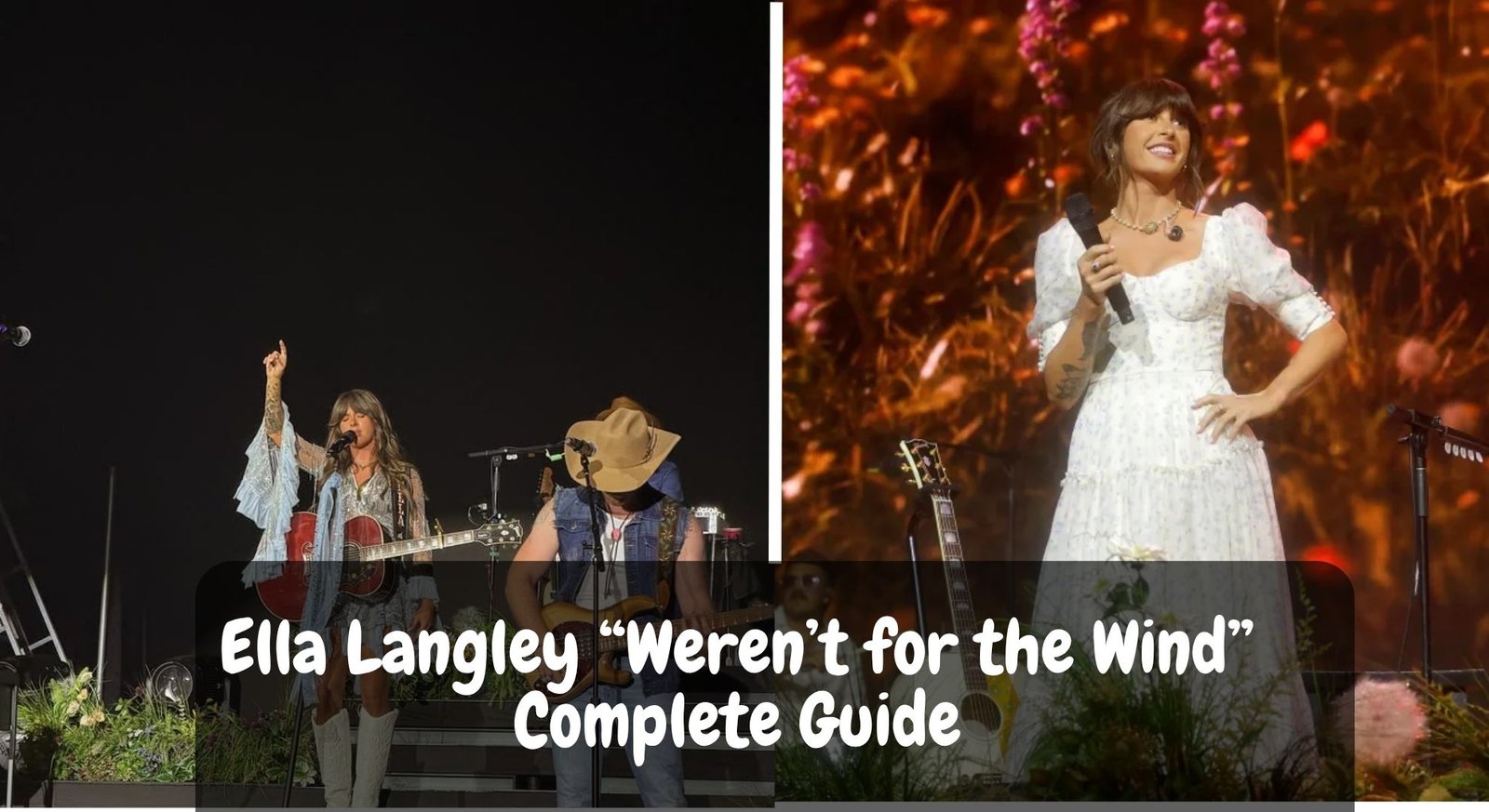
Ella Langley “Weren’t for the Wind”
If you’re anything like me, you don’t just casually like Ella Langley. You replay the same song until you can hear every breath between lines, you watch the live clips, you read every interview, and you want one place that pulls it all together.
I’m Nathalie Valbuena, a die hard Ella Langley fan, and I made this guide so you can understand “Weren’t for the Wind” from every angle. What it means, how it was written, why it blew up on radio, what the video is really saying, and where it fits in her career story.
“Weren’t for the Wind” at a glance
|
Song |
Weren’t for the Wind |
|
Artist |
Ella Langley |
|
Release date |
October 4, 2024 |
|
Label |
SAWGOD and Columbia Records |
|
Project |
Still Hungover (deluxe era tied to Hungover) |
|
Writers |
Ella Langley, Joybeth Taylor, Johnny Clawson |
|
Producer |
Will Bundy |
|
Biggest radio milestone |
No. 1 on Country Airplay (first solo radio No. 1) |
|
Hot 100 peak |
No. 18 |
|
RIAA |
2× Platinum |
|
Official music video |
March 25, 2025 |
|
Writing location |
On a tour bus in Wyoming |
Source basis for the key facts above comes from the competitor page details you provided plus commonly referenced industry trackers like Billboard, Mediabase, and the RIAA database.
Why this song matters in Ella’s career
Before “Weren’t for the Wind,” a lot of the mainstream conversation around Ella was powered by collaboration momentum. This single changed the tone.
To me, this is the moment where she proved to radio and casual listeners that she didn’t need a duet to carry a hit. It’s a solo statement that still feels personal, not packaged.
And if you’ve followed setlists and fan-shot videos from the Still Hungover Tour into the 2026 Dandelion Tour run, you already know this one isn’t treated like filler. It’s played like a pillar.
What “Weren’t for the Wind” is about, in plain language
At its core, “Weren’t for the Wind” is an honesty song.
Ella’s narrator isn’t acting like a villain, and she’s not pretending she’s the victim either. She’s basically telling a future partner:
I could be the kind of person who stays. I can picture roots, a steady life, the whole thing. But something in me shifts. I change direction. I keep moving. That’s who I am.
The central metaphor: the wind
The wind isn’t just scenery. It’s the personality.
The narrator is comparing her own nature to something you cannot control or convince. Wind doesn’t “mean” to change. It just does. That’s what makes the message land so hard: it’s self-aware without turning into self-pity.
The emotional tension that makes it hit
What makes the song stick isn’t just “I’m a rolling stone.”
It’s the fact that she can genuinely see the other life. She can imagine staying. That’s why it stings. The song lives in that tension between wanting comfort and needing motion.
If you’re listening and thinking, I’ve dated someone like this, or I am someone like this, that’s the point. It’s written wide enough for you to step into it.
The story behind the song: written on the road in Wyoming
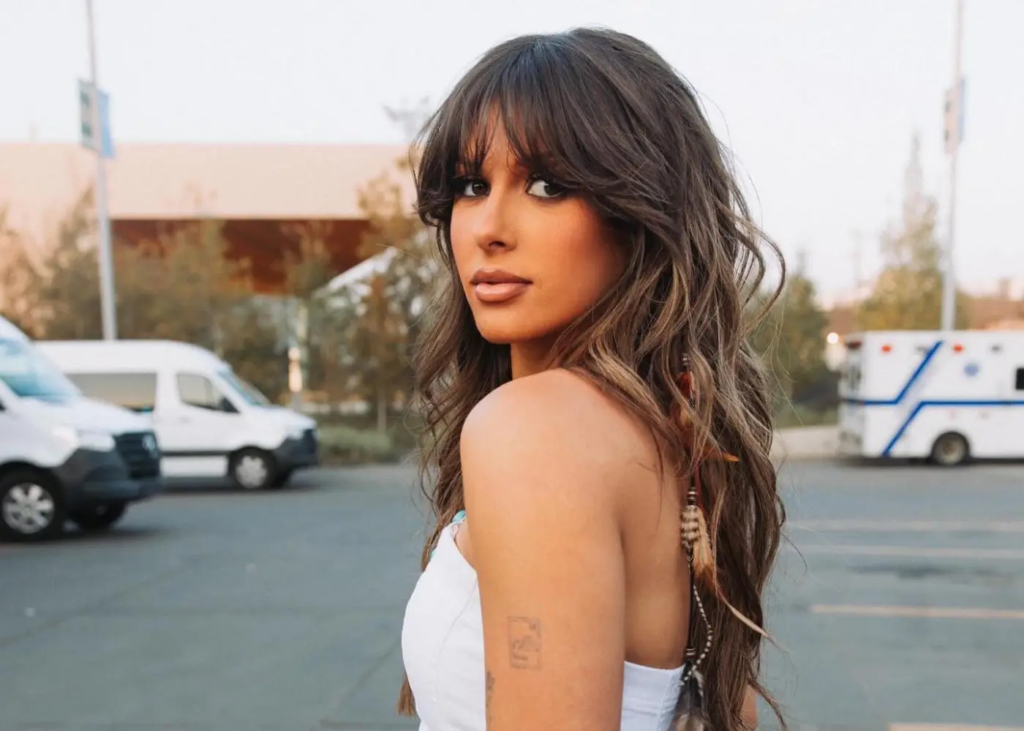
One of my favorite things about Ella’s writing is how visual it is. This song has that wide-open-land feeling, and the backstory matches it.
“Weren’t for the Wind” was written on a tour bus in Wyoming with Joybeth Taylor and Johnny Clawson. The inspiration was tied to being on the road and looking out at that flat, massive landscape. Ella has described being struck by the imagery of a horse running alongside the vehicle while traveling through Wyoming.
That detail matters because it explains why the song feels like movement. Not metaphorical movement. Actual miles.
Why that co-write team matters
If you track Ella’s catalog, Joybeth Taylor is not a random name. The relationship is real and long-running. Ella and Joybeth have written a lot together, and by Ella’s own comments in interviews, that partnership is a big part of how her sound became her sound.
When “Weren’t for the Wind” became a major radio moment, it wasn’t just an industry win. It was a “we built this from the porch days” win.
Production and sound: why it feels breezy but heavy at the same time
The producer on the track is Will Bundy, and the production choices are doing storytelling work, not just “making it country.”
Here’s what you can hear even if you don’t know technical terms:
1. Pedal steel that sounds like distance
That weeping, open-road steel tone immediately sets the mood. It makes the song feel like it has horizon lines.
2. Mid-tempo groove that rolls instead of punches
The drums don’t hit like a stadium banger. They move like tires on asphalt. That “rolling” feeling supports the whole wind theme.
3. Space in the mix
There’s room around the vocal. That matters because the lyric is the blade. If the track were too dense, the confession wouldn’t cut as clean.
And vocally, Ella’s drawl and phrasing are doing what great country singers do: sounding effortless while being insanely intentional.
Chart performance and commercial milestones
This is the part people summarize in one sentence, but I think it’s worth seeing the full picture because it shows how the song traveled from country radio into wider culture.
Chart peaks and notable stats
|
Country Airplay |
No. 1 (first solo radio No. 1) |
|
Hot Country Songs |
Top 5 |
|
Billboard Hot 100 |
No. 18 |
|
RIAA certification |
2× Platinum |
|
International |
Reported No. 1s on Canada Country and UK Country Airplay |
|
Streaming |
Reported around 300 million Spotify streams by early 2026 |
Notes on sources: chart positions are typically tracked via Billboard and Mediabase. Certifications come from the RIAA. Streaming counts change daily; the “around 300 million” figure is widely reported in coverage from early 2026 and should be treated as time-stamped, not permanent.
What I think the numbers actually mean
A lot of songs go No. 1 on country radio and still feel “inside the genre.” “Weren’t for the Wind” did the rare thing where it stayed country but crossed outward.
That Hot 100 peak matters because it reflects real reach beyond core country listeners.
The music video: the visual version of the lyric
The official music video premiered March 25, 2025, co-directed by Ella Langley and Wales Toney.
The storyline, in simple terms, is about commitment and constraint. She’s shown moving toward an engagement and a more traditional future, but there’s pressure to shrink her ambition and silence the version of her that wants the road and the stage. She ultimately chooses herself and leaves the ring behind.
Why the ending works
The ring left behind is the visual equivalent of the hook idea.
She isn’t saying love is stupid. She’s saying:
I can’t promise stillness if the wind in me keeps turning.
That’s why the video feels like it matches the song instead of being a random “pretty clip.” It follows the same emotional logic.
Cultural moments: covers and co-signs
A big pop-culture boost came when Kelly Clarkson covered the song on her show and praised Ella’s songwriting and tone. Those kinds of mainstream co-signs matter because they introduce the song to people who don’t follow country radio charts.
And when an elite vocalist chooses your song, it quietly tells everyone in the room: the writing is strong enough to stand on its own.
Where it fits in Ella Langley’s bigger story
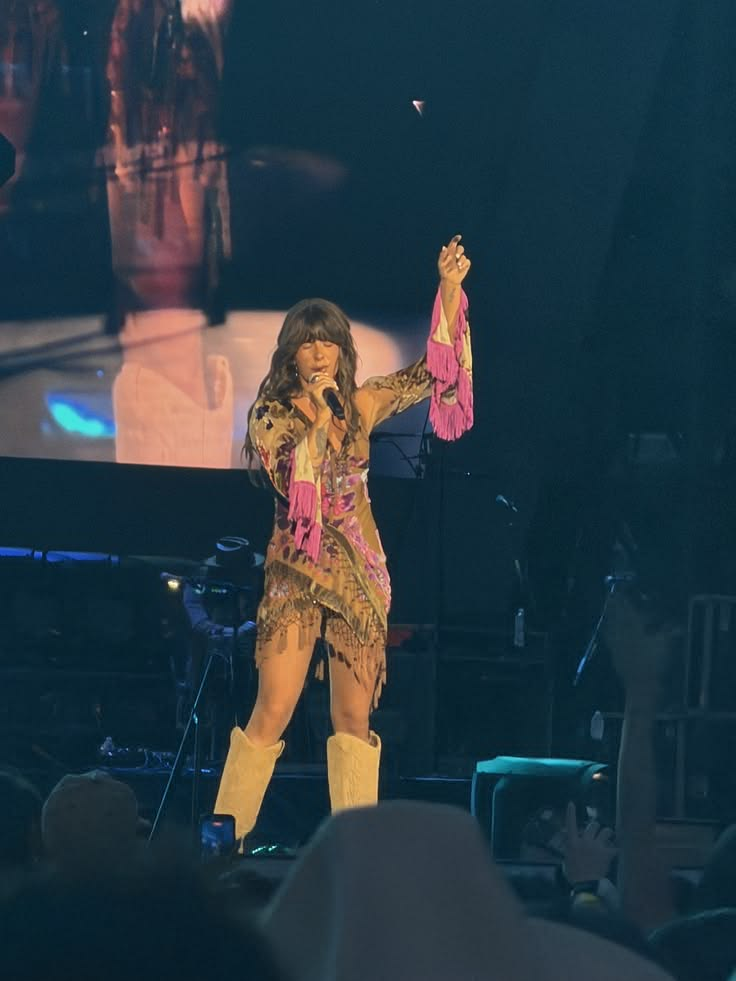
If you’re mapping Ella’s career like chapters, I see “Weren’t for the Wind” as the bridge chapter.
It sits between:
- the collaboration-driven visibility that helped build her audience early on, and
- the era where she’s undeniably headlining on her own identity
It’s also a thematic thesis for Ella as an artist: motion, grit, self-knowledge, and a refusal to be sweetened into something she’s not.
Quick facts and credits
| Writers | Ella Langley, Joybeth Taylor, Johnny Clawson |
| Producer | Will Bundy |
| Label | SAWGOD and Columbia Records |
| Release | October 4, 2024 |
| Video directors | Ella Langley, Wales Toney |
| Signature theme | Freedom versus settling down |
| Sound palette | Pedal steel, airy guitars, mid-tempo roll |
My listening guide: what to pay attention to (without quoting lyrics)
I can’t paste the lyrics here, but next time you play it, listen for these moments:
- The way the verses feel like a confession rather than a performance
- How the hook lands like a reason, not an excuse
- The production “space” around her voice that makes the story feel lonely in a wide-open way
- The ending, which doesn’t feel triumphant. It feels inevitable
If you’ve ever had to tell someone the truth about yourself even when it makes you look difficult, this song will hit you right in the chest.
FAQ
Is “Weren’t for the Wind” a breakup song
Not exactly. It’s more like a pre-breakup truth. It’s a warning label with a heart behind it.
Who wrote “Weren’t for the Wind”
Ella Langley wrote it with Joybeth Taylor and Johnny Clawson.
When was it released
October 4, 2024.
What album is it on
It’s tied to the Still Hungover era, connected to her Hungover rollout.
Did it really hit No. 1
Yes, it reached No. 1 on Country Airplay, marking Ella’s first solo radio No. 1.