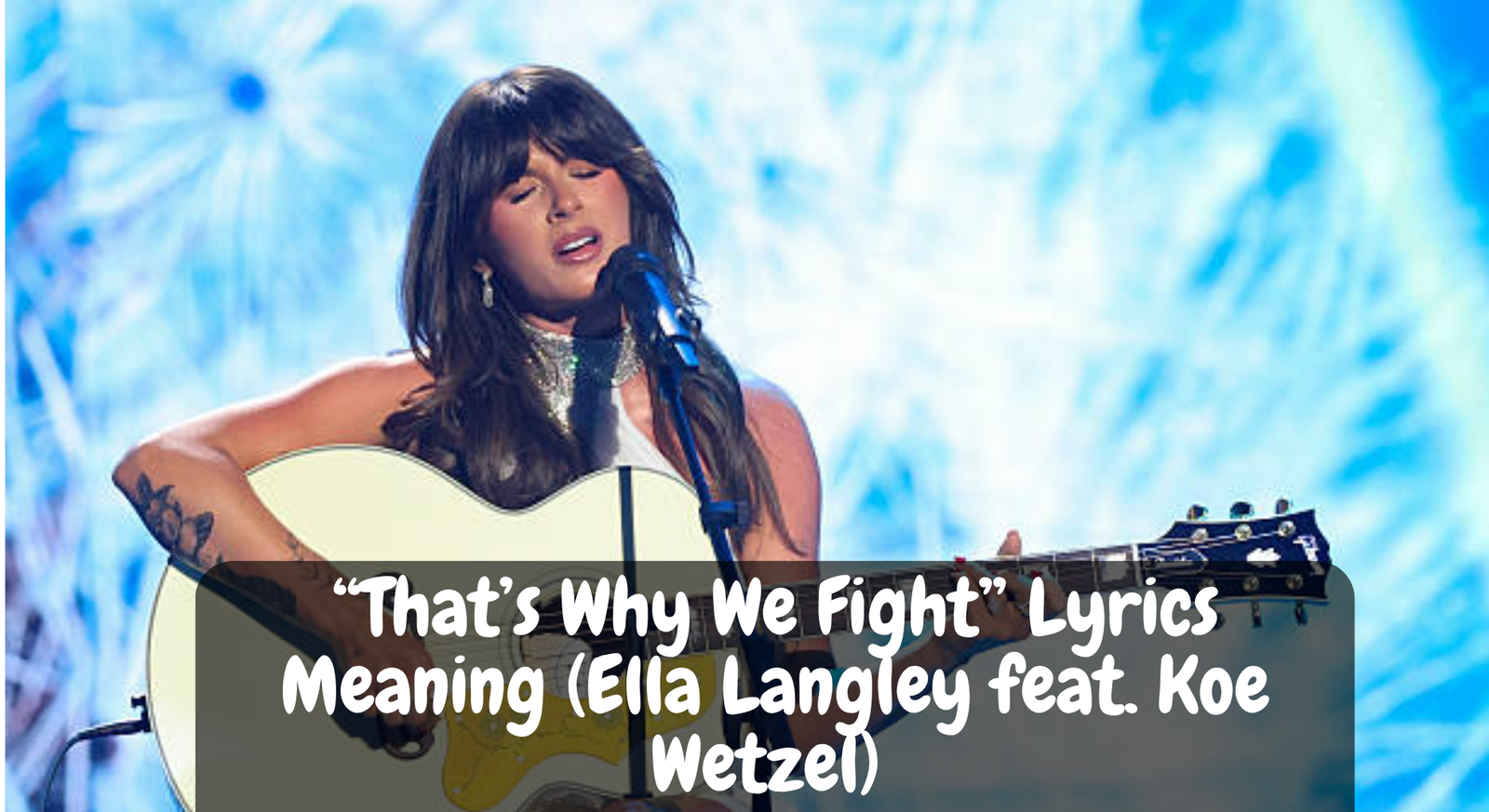
“That’s Why We Fight” Lyrics Meaning (Ella Langley feat. Koe Wetzel)
I’m Nathalie Valbuena, and I’m a die hard Ella Langley fan. I made this guide because if you’re anything like me, you don’t want to dig through ten tabs, half-remembered TikToks, and random quote graphics to understand one song. You want everything in one place: the story, the meaning, the writing details, the symbolism, and why it still hits so hard.
Ella Langley and Koe Wetzel’s “That’s Why We Fight” is one of those songs that feels a little too real on purpose. It doesn’t romanticize chaos, but it also doesn’t pretend some relationships don’t run on it.
This is my deep dive into the lyrics meaning and the bigger picture behind the record.
Quick take (for when you need the answer fast)
- Release date: April 21, 2023
- Label: SAWGOD / Columbia Records
- Project: Lead single from Ella’s debut EP Excuse The Mess
- Writers: Ella Langley, Joybeth Taylor, Brett Tyler, David Garcia
- Producer: Will Bundy
- Core meaning: A relationship where fighting is the glue. The arguments aren’t a glitch. They’re the system.
Source for the timeline and key facts: Jess Rose, “Ella Langley and Koe Wetzel ‘That’s Why We Fight’ Full Story” (Published March 12, 2026).
What “That’s Why We Fight” is actually about (and what it’s not)
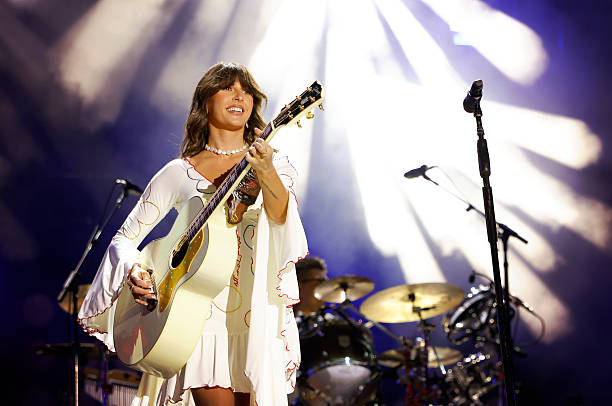
Let’s clear this up first, because it’s the main reason the song is so addictive.
It’s not a love song
There’s attraction, chemistry, obsession, and history. But the song doesn’t feel like “we’re healthy and growing.” It feels like “we’re tangled.”
It’s not a clean breakup song either
Nobody’s doing the “I’m better off now” victory lap. The story lives in that uncomfortable middle where you know it’s toxic, but you also know why you keep going back.
So what is it?
It’s a portrait of a couple who have basically trained their relationship to run on friction:
- Jealousy
- late-night accusations
- pushing buttons
- making up just hard enough to reset the cycle
Ella herself has described the idea as “your favorite person to fight with,” and called it the most toxic song she’s ever written (shared in the source story above). And honestly, that framing is the key: the song isn’t pretending the toxicity is cute. It’s saying the toxicity is the point.
The emotional thesis of the chorus (in plain language)
The hook basically argues:
We go through hell to get to heaven, and we’re addicted to that swing.
That’s what makes it so believable. A lot of messy relationships don’t survive because the people are clueless. They survive because the high after the fight feels intense enough to mistake for love.
Verse-by-verse meaning (without copying the full lyrics)
I can’t reproduce full lyrics here, but I can walk you through the narrative and highlight short phrases.
Verse 1: The scene starts in the middle of the mess
The song opens like a door swinging open on an argument already happening. We’re dropped into late-night behavior, suspicion, and the kind of evidence that makes your stomach drop.
What I hear here is: trust is already damaged, and both people know exactly where to aim.
Meaning: This isn’t “we fight sometimes.” This is “we live here.”
Pre-chorus: Pressure building, not resolution
Instead of one person calming things down, the tension escalates. The writing doesn’t move toward repair. It moves toward ignition.
Meaning: They aren’t trying to fix it. They’re trying to win the moment.
Chorus: Fighting as intimacy, chaos as romance
This is where the song becomes its own argument: the destruction and drama aren’t just side effects. They’re how the couple connects.
There’s a crucial line about knowing that going through “hell” is what gets them to “heaven.”
Meaning: The relationship is chemically bonded to extremes. They don’t trust calm. Calm feels like boredom or distance. So they create a storm to feel close again.
Verse 2 (Koe’s perspective): He’s not apologizing, he’s matching energy
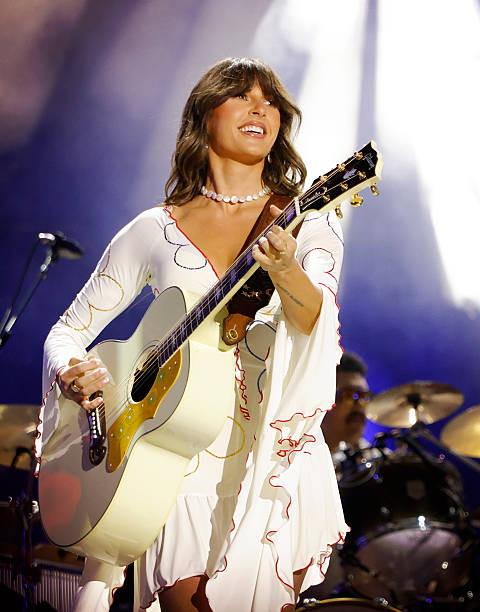
Koe Wetzel’s verse doesn’t soften the story. It answers it. He plays the role of someone who’s fully participating in the dysfunction.
Meaning: This is important: the duet structure proves it takes two people to keep this cycle alive. It’s not one villain and one victim in the writing. It’s mutual damage.
Bridge: The confession that lands the hardest
The bridge is where the song basically admits:
We’ve tried being sweet. We’ve tried the “normal couple” behavior. It doesn’t fit us anymore.
Meaning: This isn’t a temporary rough patch. It’s identity-level. The fighting has become “who we are together.”
The title “That’s Why We Fight” is a twist
Most songs about fighting are either:
- “We fight but we still love each other”
- or “We fight so I’m leaving”
This title means something darker:
We fight because we need it.
It’s not an obstacle to the relationship. It’s the engine.
That’s why the song sticks with people. It’s saying the quiet part out loud.
Why the duet matters (and why Koe Wetzel was the right choice)
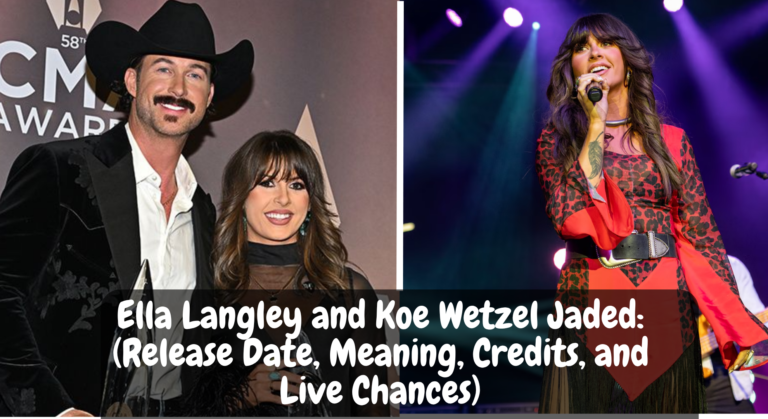
From the reporting in the source story, Ella knew early that the song needed two voices or it would fall flat. I agree with that completely as a listener.
If only one person sang it, it could turn into either:
- self-pity, or
- one-sided blame
But when Ella and Koe trade lines, it feels like an argument happening in real time.
What each voice brings
|
Tone |
sharp, controlled, cutting |
raw, gritty, relentless |
|
Emotional color |
“I know what you did” energy |
“I’m not backing down” energy |
|
Role in the story |
calls out the chaos |
leans into the chaos |
My fan take: Koe doesn’t sound like a guest feature pasted on top. He sounds like the other half of the problem, which is exactly what the song needs.
How the song was written and produced (the real-world creation story)
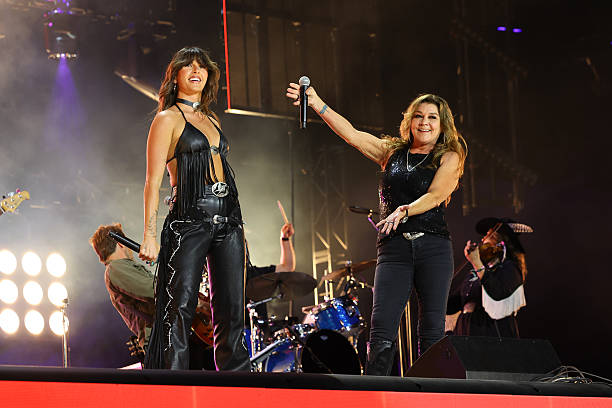
According to the source story, Ella co-wrote the track with Joybeth Taylor, Brett Tyler, and David Garcia, with Will Bundy producing, and the process took about 18 months from idea to release.
That timeline makes sense when you hear how tight the concept is. A song like this has to balance:
- being specific enough to feel true
- but not so specific it becomes someone’s private diary
This one threads that needle.
The music video symbolism (why boxing was a perfect metaphor)
The official video was directed by Wales Toney and filmed at Music City Boxing and Vanderbilt University in Nashville (per the source story).
And yes, boxing is obvious. But it’s also accurate:
- A fight has rules, rounds, conditioning, adrenaline
- You can be hurt and still choose to step back in
- People cheer from the outside without feeling the pain
What the boxing setting adds to the lyrics meaning
|
training, repeating drills |
the couple repeating the same conflict cycle |
|
coach pushing harder |
emotional escalation, provocation, testing limits |
|
getting back up after hits |
returning after blowups |
|
the ring |
a contained space where harm becomes “normal” |
It mirrors the song’s point: conflict isn’t accidental here. It’s rehearsed.
By the numbers (milestones and performance)
Here’s a clean snapshot of the facts reported in the source story, plus what they imply.
Key facts table
|
Release date |
April 21, 2023 |
|
Label |
SAWGOD / Columbia Records |
|
EP |
Excuse The Mess |
|
Writers |
Ella Langley, Joybeth Taylor, Brett Tyler, David Garcia |
|
Producer |
Will Bundy |
|
RIAA |
Gold certification (Aug 27, 2024) |
|
Units |
500,000+ (Gold threshold) |
|
EP streams |
120M+ within under a year (reported) |
|
CMT |
Nomination: Collaborative Video of the Year (2024) |
|
First live performance together |
Oct 2025 at Billy Bob’s Texas (reported) |
What those numbers tell me as a fan
A debut-EP-era single hitting Gold and earning a CMT nomination isn’t just “a song people liked.” It’s a statement record. It told listeners exactly what Ella’s lane was going to be: country with teeth, honesty that doesn’t sanitize itself, and storytelling that understands messy humans.
Full credits (for the music nerds like me)
Based on the source story, here are the listed credits.
|
Lead vocals |
Ella Langley |
|
Featured vocals |
Koe Wetzel |
|
Songwriters |
Ella Langley, Joybeth Taylor, Brett Tyler, David Garcia |
|
Producer |
Will Bundy |
|
Recording engineer |
Drew Bollman |
|
Mixing engineer |
Jim Cooley |
|
Electric guitar |
Derek Wells, Ben Flanders |
|
Acoustic guitar |
Ilya Toshinskiy |
|
Drums |
Jerry Roe |
|
Keyboards |
Dave Cohen |
|
Video director |
Wales Toney |
|
Label |
SAWGOD / Columbia Records |
|
Release date |
April 21, 2023 |
|
RIAA certification |
Gold (Aug 27, 2024) |
Why “That’s Why We Fight” still matters now
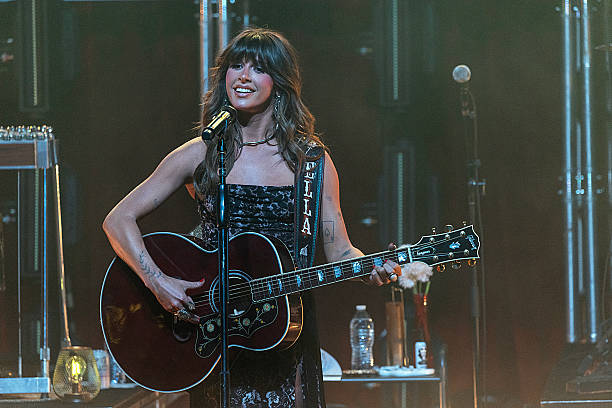
Even with everything Ella’s career has reportedly stacked up since then (the source story points to major chart milestones and bigger tours later), this track still feels like the foundation.
Because it introduced three things that are now part of her artistic identity:
- Characters who aren’t trying to look good
- A willingness to say the ugly truth
- A sound that can handle grit and melody at the same time
If you discovered Ella through later songs and you’re working backward, “That’s Why We Fight” is where you’ll hear the blueprint.
Listener guide: when this song hits hardest (and when to skip it)
I’m going to say this plainly, friend-to-friend: if you’re currently in a relationship where fighting is escalating into fear, control, or any kind of harm, this song can feel like validation when you actually need distance and support.
But if you’re listening from the outside of it, or from a place of reflection, it can be powerful because it names the cycle without dressing it up.
FAQ (People Also Ask)
Who wrote “That’s Why We Fight”?
Ella Langley co-wrote it with Joybeth Taylor, Brett Tyler, and David Garcia (per the source story).
Is “That’s Why We Fight” Gold certified?
The source story reports it was certified RIAA Gold on August 27, 2024, meaning 500,000+ units.
Where was the music video filmed?
The story reports filming locations as Music City Boxing and Vanderbilt University in Nashville, directed by Wales Toney.
When did Ella Langley and Koe Wetzel first perform it live together?
The source story reports their first live performance together happened in October 2025 at Billy Bob’s Texas in Fort Worth.
What EP is the song on?
It’s the debut single from Ella Langley’s EP Excuse The Mess.