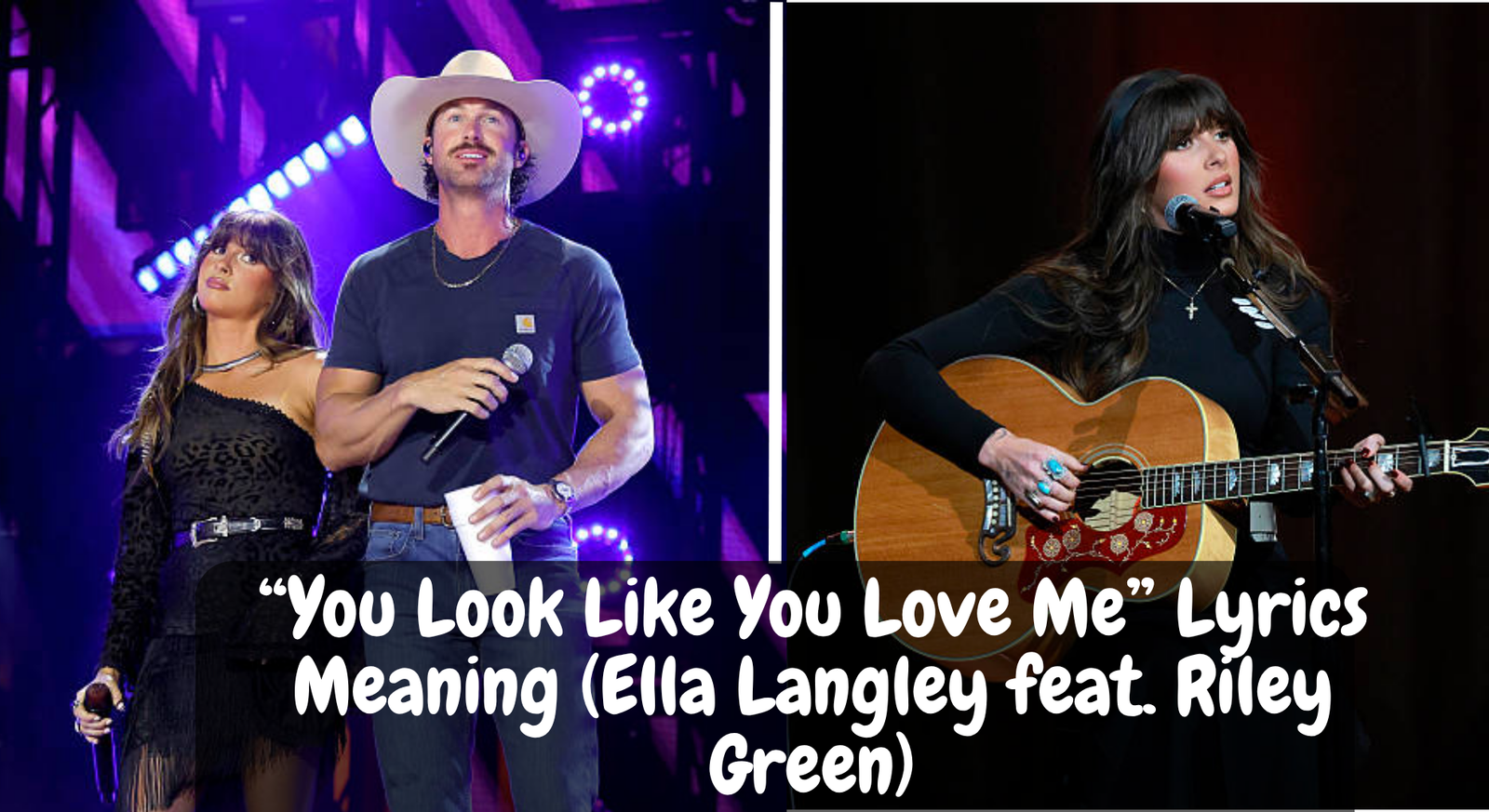
“You Look Like You Love Me” Lyrics Meaning (Ella Langley feat. Riley Green)
I’m Nathalie Valbuena, and I’m a die-hard Ella Langley fan. I put this guide together for the same reason I make notes in my phone after I hear a song that won’t let go: if you’re here, you don’t want bits and pieces. You want the full story in one place—how it started, what it means, why the sound is the way it is, what happened with Riley Green, and how it turned into that kind of hit.
This is my deep dive into “You Look Like You Love Me”—written like I’m talking to you directly, but built on the reporting from the source you gave me: Kelly Fisher, “You Look Like You Love Me: The Full Story Behind the Hit” (Published March 8, 2026; Updated March 11, 2026).
Quick take (save this if you just need the headline answer)
At-a-glance facts
|
Song |
“You Look Like You Love Me” |
|
Artists |
Ella Langley (feat. Riley Green) |
|
Where it began |
Nashville co-write in 2022 with Aaron Raitiere; originally treated like a joke/demo |
|
How Riley joined |
Added his perspective/verse while on tour with Ella in 2024 |
|
Live debut (duet) |
June 1, 2024 in Minneapolis (performed before official release) |
|
Official release |
June 21, 2024 |
|
Radio add date |
August 5, 2024 |
|
Billboard Country Airplay |
No. 1 dated Dec. 14, 2024 (only woman to hit No. 1 on that chart in 2024; ended a long all-male run) |
|
Billboard Hot 100 |
Debuted at No. 53 (chart dated July 6, 2024) and later peaked at No. 30 |
|
Streams/certification |
Reported 267M+ Spotify streams; RIAA 2x Platinum |
|
Producer |
Will Bundy |
|
Video release |
August 28, 2024 |
|
Video location/cameos |
Guntown Mountain (Cave City, KY); cameo by Jamey Johnson; cameo by Riley’s dog Carl |
|
Awards |
Reported 7 wins across 2024–2025 CMA/ACM cycles, including a historic CMA sweep in 2025 |
Where the song actually started (and why that matters)
According to the Fisher story, “You Look Like You Love Me” started in a 2022 Nashville writing session with Aaron Raitiere—a writer with major mainstream credits (the story notes his connection to a well-known Lady Gaga ballad).
The part that makes this origin feel so country is this: it didn’t start as a “we need a single.” It started as a personal moment that turned into a punchline, and then kept growing until it wasn’t a punchline anymore.
And here’s the key detail that changes how you hear the song:
- The early version reportedly lived in the “demo world.”
- Ella didn’t plan to release it.
- Her manager (Maya Hansen, per Fisher) pushed it forward after hearing it.
As a listener, that explains the tone. The track doesn’t feel like it was designed by committee.
How Riley Green became part of it (and why the duet feels so natural)
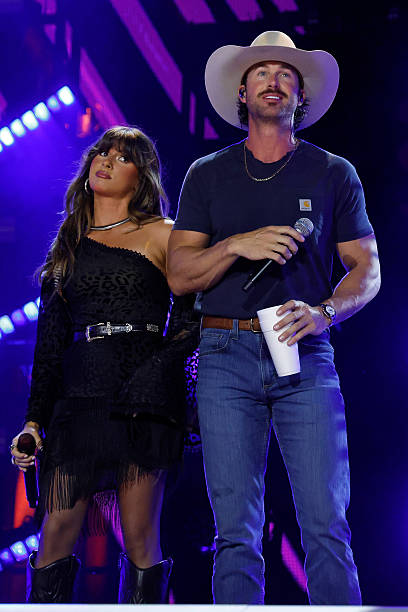
Per Fisher’s reporting, Ella joined Riley Green’s tour in early 2024. They share Alabama roots and a similar respect for traditional country.
What happened next is the kind of timing you can’t manufacture
- Ella sent Riley the song.
- Riley thought the story needed a male answer—a reply from the cowboy’s side.
- He wrote his part on the road, between tour stops (not in a neat, label-planned studio moment).
The detail most people miss: they sang it live before it was “a single”
Fisher reports that on June 1, 2024, they performed it together in Minneapolis—three weeks before the official release date.
That matters because it tells you the duet wasn’t slapped on after it started climbing. The duet was part of the identity before the public even had a studio version.
Riley’s skepticism is part of the story
Fisher also reports Riley wondered if the talking-verse style was too traditional for radio—and assumed it might just be a fun live moment. That’s important because it frames the hit correctly:
This wasn’t “everybody knew it would work.” It was a risk that worked because people missed this exact kind of country writing.
What the song is really about (it’s flirtation, but it’s also a power shift)
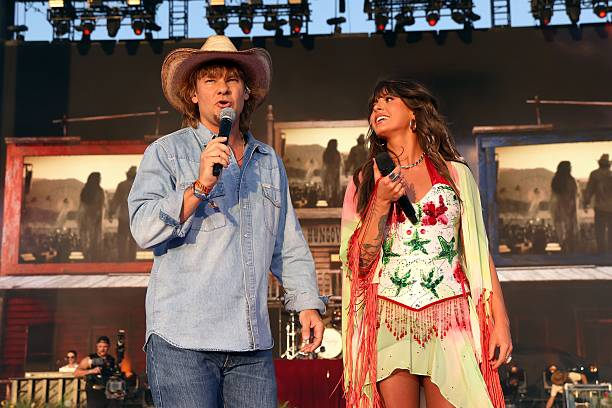
On the surface, it’s simple: a woman sees a cowboy at a bar, walks up, and says the line that becomes the hook—direct, playful, fearless.
But the deeper meaning (and why it landed) is about agency and emotional self-protection living in the same body.
Theme 1: The woman is the one who initiates
A lot of classic country is built on a default dynamic: the man pursues, the woman responds.
This song flips that. Ella’s character:
- spots the guy,
- approaches him,
- sets the tone,
- and forces the story to move.
Theme 2: The confidence is real—and so is the vulnerability underneath it
Fisher’s story ties the concept back to Ella describing a time when she’d pull away once things started feeling serious.
So when you hear the boldness in the verses, the subtext is:
- “I can walk right up to you,” and
- “I’m not sure what I do when it starts to feel mutual.”
That push-pull is why the song feels human instead of gimmicky.
Theme 3: Riley’s verse doesn’t “take over”—it completes the mirror
Riley isn’t there to rescue the narrative. He’s there to confirm: yes, she read the room right. His perspective makes the flirtation feel like a two-way street rather than a monologue.
“Lyric moment → what it’s doing” table (no full lyric copying)
|
Bar-room setting, locked-in eye contact |
Immediate chemistry, no slow burn |
|
The pickup-line hook |
She’s choosing boldness over “waiting to be chosen” |
|
Talking verses |
Feels like a real memory being narrated, not a polished pop scene |
|
The male response verse |
Confirmation, mutual interest, the “story closes” cleanly |
The talking-country tradition behind the sound (this wasn’t “retro,” it was intentional)
A lot of write-ups call the spoken/talking verses “throwback.” Fisher’s story goes further: Ella has referenced classic names at awards-show moments—artists tied to the era when talking-country was a real mainstream device.
Why the talking verses work here
Talking verses do something singing doesn’t always do:
- They sound like confidence.
- They sound like a story you’re telling your friend.
- They pull you into the scene faster than a big melodic setup.
Sound choices and what they communicate
|
Pedal steel front-and-center |
Traditional country DNA, warmth, nostalgia |
|
Slow two-step sway |
Dance-floor realism, bar-room pacing |
|
Talking verses |
Humor + intimacy, like overhearing a real interaction |
|
Duet structure |
Call-and-response chemistry, not just “feature for streams” |
TikTok, Red Rocks, and going viral (the exact kind of viral that actually lasts)
Per Fisher’s timeline:
- The song was teased on social media around May 13, 2024
- A clip from a Red Rocks soundcheck spread in late May
- Official release: June 21, 2024
- Radio: August 5, 2024
Why TikTok grabbed it
Not every viral country moment turns into radio + awards + longevity. This one did, because people used it in a very specific way (as reported in the Fisher story): couples used it for photo slideshows, relationship posts, and wedding content.
That matters because those aren’t “one joke and done” videos. That’s repeat listening—people tying the song to real-life milestones.
Billboard No. 1 (and why the December 2024 moment mattered beyond one chart)
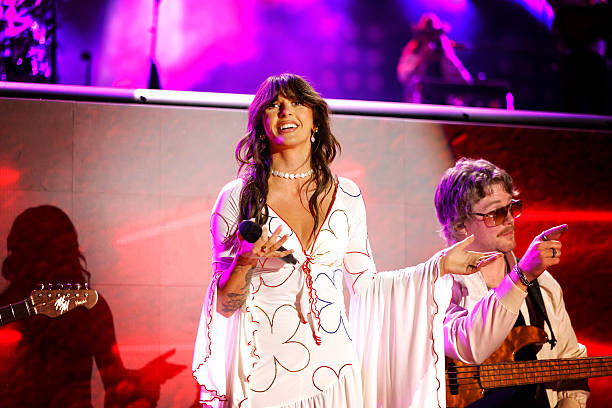
Fisher reports that the song hit No. 1 on Billboard Country Airplay (dated Dec. 14, 2024), ending a long stretch where men held the top spot. It also notes Ella was the only woman to top that chart in 2024.
If you’re not a chart person, here’s why you should still care:
Country Airplay is heavily shaped by programming habits. So a woman-led record hitting No. 1—with talking verses and traditional production—isn’t just a win. It’s proof that the audience appetite is bigger than the narrow lane radio sometimes assumes.
Chart + performance snapshot (per Fisher)
|
Hot 100 debut |
No. 53 (dated July 6, 2024) |
|
Hot 100 peak |
No. 30 |
|
Country Airplay peak |
No. 1 (dated Dec. 14, 2024) |
|
Spotify streams |
267M+ |
|
RIAA |
2x Platinum |
Seven awards across two years (and the historic CMA sweep)
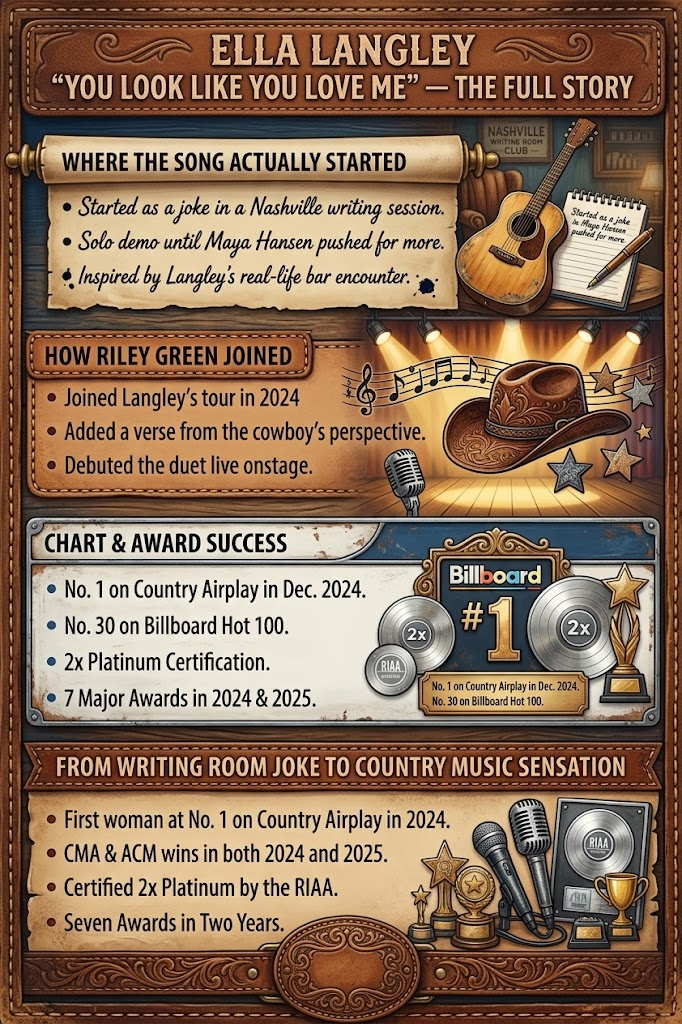
Fisher’s story lays out an awards run that’s honestly hard to wrap your head around considering how casually this song started.
Awards timeline (as reported)
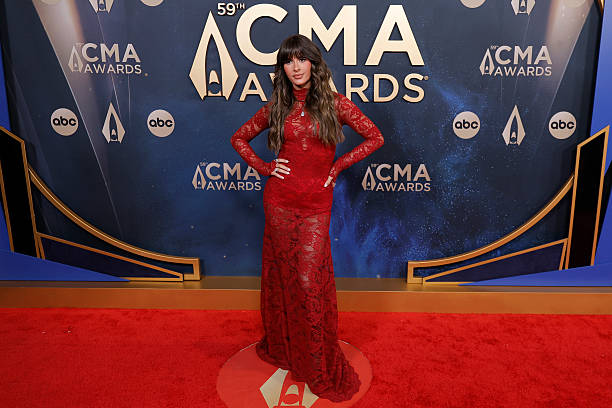
|
2024 |
CMA Awards |
Musical Event of the Year |
|
2025 |
ACM Awards |
Single of the Year; Visual Media of the Year; Music Event of the Year (and Fisher reports Ella won 5 total ACMs that night across categories) |
|
2025 |
CMA Awards |
Single of the Year; Song of the Year; Music Video of the Year (first song to win all three in one CMA night, per Fisher) |
That last part is the legacy moment: Single + Song + Video in one CMA ceremony. If you’re building an “Ella essentials” playlist for someone, this is why this track isn’t optional.
The music video: hidden details that change how you read the song
Per Fisher:
- Video released Aug. 28, 2024
- Co-directed by Ella Langley with Wales Toney and John Park
- Filmed at Guntown Mountain in Cave City, Kentucky
- Cameos: Jamey Johnson as the sheriff, plus Riley’s dog Carl
Why the setting works
A Western saloon is not just “a vibe.” It’s a visual metaphor for what the song does lyrically:
- She controls the room (the gaze, the approach, the momentum).
- He’s framed like the outlaw on the poster—he’s reactive, he’s being “read.”
And Jamey Johnson showing up (per Fisher) isn’t random. It’s a credibility stamp from a respected traditional voice—basically the video saying, this belongs in the classic country lineage.
Video “easter eggs” table (simple guide)
|
Saloon entertainer framing |
Ella as narrator in control of the story |
|
Wanted poster |
Riley as the romantic target/outsider |
|
Sheriff interruption (Jamey Johnson) |
Classic Western conflict + genre lineage nod |
|
Pioneer-themed location |
Reinforces throwback storytelling instead of modern gloss |
|
Carl cameo |
Personal touch, not overly “label-polished” |
The full timeline (clean, skimmable)
|
2022 |
Ella writes the song with Aaron Raitiere in Nashville; initially treated like a joke/demo |
|
Early 2024 |
Ella tours with Riley Green; she shares the song |
|
June 1, 2024 |
First live duet performance in Minneapolis (before release) |
|
June 21, 2024 |
Official release |
|
Aug. 5, 2024 |
Radio release |
|
Nov. 2024 |
Per Fisher, the song gets a major mainstream TV performance slot (Fallon) |
|
Dec. 14, 2024 |
No. 1 on Billboard Country Airplay |
|
Aug. 28, 2024 |
Official music video release |
|
2024–2025 |
Award sweep across CMA/ACM cycles; historic CMA 2025 triple win |
FAQ (fast answers)
Is “You Look Like You Love Me” based on a true story?
Per Fisher’s reporting, yes—Ella has connected the inspiration to a real-life moment (including spotting someone playing pool and choosing to make the first move).
Who wrote “You Look Like You Love Me”?
Per Fisher: Ella Langley and Aaron Raitiere wrote it in 2022. Riley Green later added his verse/perspective and is credited as a writer on the duet version. Will Bundy produced the track.
Did Riley Green think it would be a hit?
Per Fisher, no—he reportedly doubted whether the talking-verse structure would connect with radio.
When did it go No. 1?
Per Fisher: Dec. 14, 2024 on Billboard Country Airplay, and Ella was the only woman to hit No. 1 on that chart in 2024.
How many awards did it win?
Per Fisher: Seven across the 2024 and 2025 CMA/ACM cycles, including a historic CMA night where it won Single, Song, and Music Video of the Year all at once.
Where was the music video filmed and who appears in it?
Per Fisher: filmed at Guntown Mountain in Cave City, Kentucky. Cameos include Jamey Johnson and Riley’s dog Carl.